
First-Timer Status at Book Club
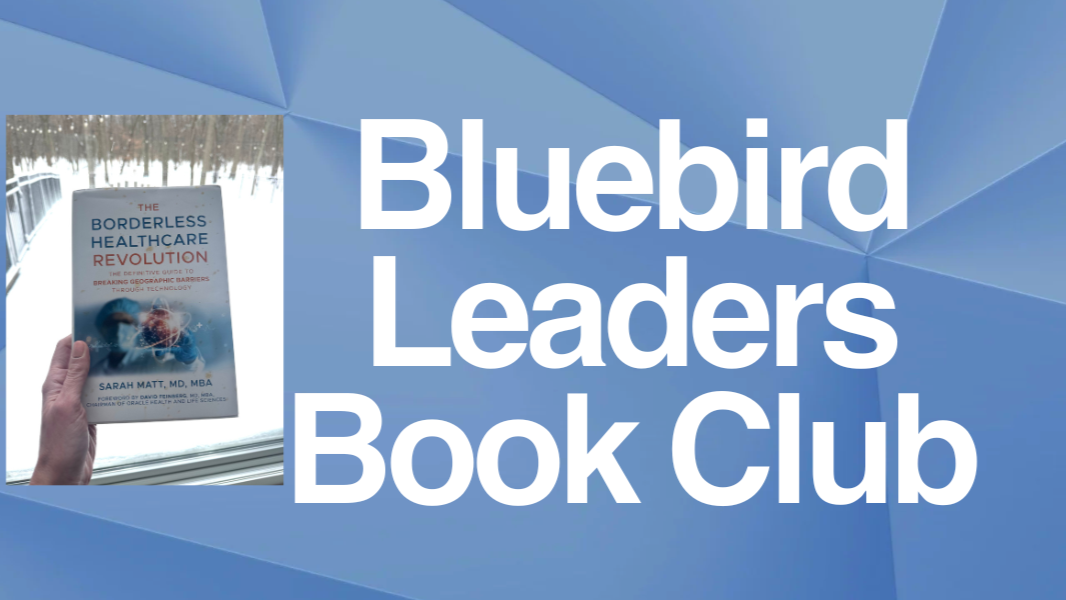
Last night was my first time attending a Bluebird Leaders Book Club, and Sarah Matt MD, MBA, the author of The Borderless Healthcare Revolution, gathered women from a variety of organizations across the healthcare industry.
Reading this now felt especially meaningful after recently writing about my grandma. With everything still so recent, the conversations about technology, rural care, access, trust, and aging populations landed differently. It kept bringing me back to a simple but grounding question that Sarah called the “grandma test," not as a literal checklist, but as a perspective shift. When we build or change anything in healthcare, can the people we love actually use it? Does it genuinely help? Does it reduce friction or quietly save lives without asking more of them than they can give?
There was a moment where Sarah said something like, “turn your camera off if you think the healthcare tools available today are actually well designed and easy to use.” And my brain immediately went, wait… is this because I might cry about my gram? 😭😂 (Camera stayed on. For the record, it was very much a design and access question, not an emotional one 🥲)
A story that really stuck with me was about a low-tech charity clinic that Sarah works at: paper charts, volunteers, deeply human care. The fear wasn’t “can we implement new tech?” It was: what if even small changes cause volunteers to quit? What if moving from paper to cloud (even with the best intentions!!) breaks trust or overwhelms the very people holding the clinic together? Progress isn’t just about modernization. It’s about pacing, empathy, and respecting the humans in the system.
There was also a powerful reminder of why optimism matters. Sarah chuckled while sharing how her editor pushed her to make the book more hopeful because no one keeps reading if everything feels bleak. One example from rural Virginia made that point crystal clear: a tiny ER, no neurologist on site. Before, patients had to be driven over an hour away — losing brain cells every minute. Now, a provider clicks a button and a neurologist appears on screen in seconds. Digital access saving lives. And the key part: it works because it’s invisible to the patient. It just happens.
A few other moments that stayed with me:
Access isn’t just “digital.” It’s comprised of five pillars: physical, financial, cultural, digital, and trust-based.
Tech is often the easy part. People, trust, and change management are the hard parts.
When a patients no-show, oftentimes it's not because they are “non-compliant.” They’re juggling jobs, kids, transportation, and survival. When clinics changed hours instead of blaming patients? Access improved.
Rebecca Woods, MHA, SHIMSS, PM was sick (feel better!!) but was jumping into the chat with thoughts (very on-brand for this Bluebird Leaders group!). And this was also my first time introducing myself just a little differently...not super formally but just honestly. I caught one of my biggest cheerleaders clapping on camera. THANKS, Maureen Nylin MSN, RN, CHCIO, PMP, CDH-E. 💙
Grateful for spaces like this that resist “tech for tech’s sake” and instead ask better questions: who does this help, who might it unintentionally leave behind, and how do we build trust along the way?
Can't wait for the next book club!!